
 |
AMERICA'S NUCLEAR NON-PROLIFERATION POLICY
|
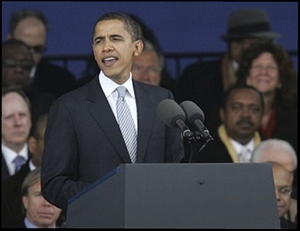
TOPIC: Foreign Policy & Defense May 26th, 2005 America's Nuclear Non-Proliferation Policy Mr. President, throughout the last half of the 20th Century, one nation - more than any other on the face of the earth - defined and shaped the threats posed to the United States. This nation, of course, is the Soviet Union and its successor state, Russia. While many have turned their attention to China or other parts of the world, I believe that the most important threat to the security of the United States continues to lie within the borders of the former Soviet Union - in the form of stockpiles of nuclear, biological, and chemical weapons and materials. We are in a race against time to prevent these weapons from getting in the hands of international terrorist organizations or rogue states. And the path to this potential disaster is easier than anyone could imagine: there are a number of potential sources of fissile material in the former Soviet Union in sites that are poorly secured; the material is compact, easy to hide, and hard to track; and weapons designs can be found on the internet. Today, some weapons experts believe that terrorist organizations will have enough fissile material to build a nuclear bomb in the next 10 years. That's right - 10 years. I rise today to instill a sense of urgency here in the Senate. I rise today to ask how we are going to deal with this threat -- tomorrow; a year from now; and a decade from now. The President has just completed an international trip that included a visit to Russia. I want to commend the President for taking this trip and making our relationship with Russia a priority. During the Cold War, the United States and the Soviet Union produced nearly 2,000 tons of plutonium and highly enriched uranium for use in weapons that could destroy the world several times over. To give you an idea of just how much this is, it takes only five to ten kilograms of plutonium to build a nuclear weapon that could kill the entire population of St. Louis. For decades, strategic deterrence, our alliances, and the balance of power with the Soviet Union ensured the relative safety of these weapons and materials. With the end of the Cold War and the collapse of the Soviet Union, all of this changed. Key institutions within the Soviet national security apparatus crumbled, exposing dangerous gaps in the security of nuclear weapons, delivery systems, and fissile material. Regional powers felt fewer constraints to develop nuclear weapons. Rogue states accelerated nuclear weapons programs. And while this was happening, international terrorist organizations who were aggressively seeking nuclear weapons gained strength and momentum. Thanks to the leadership of Senators Nunn and Lugar in creating the Cooperative Threat Reduction program at the Department of Defense, there is no question that we've made some great progress in securing these weapons. These same leaders continue to work tirelessly on the problem to this day -- Senator Nunn through the Nuclear Threat Initiative and Senator Lugar through his Chairmanship of the Foreign Relations Committee. And so today, the situation in Russia and the rest of the former Soviet Union today is drastically different that it was in 1991 or even 1996 or 2001. But the threat is still extremely dangerous and extremely real. In March of this year, a senior Russian commander concluded that 39 of 46 key Russian weapons facilities had serious security shortcomings. Many Russian nuclear research sites frequently have doors propped open, security sensors turned off, and guards patrolling without ammunition in their weapons. Meanwhile, the fanatical terrorist organizations who want these weapons continue to search every corner of the Earth, resorting to virtually any means necessary. The nuclear programs of nations such as Iran and North Korea threaten to destabilize key regions of the world. And, we are still learning about the tremendous damage caused by A.Q. Kahn, the rogue Pakistani weapons scientist. Looking back over the past decade and a half, it is clear that we could and should have done more. And so as the President returns from his trip to Russia, we should be thinking - on a bipartisan basis - about some of the critical issues that can guide us in the future to ensure that there are no more missed opportunities. The situation is too dangerous. The threat to our security too grave. The first question that we should be thinking about is what is the future of the Cooperative Threat Reduction program? Where do we go from here? In other words, what is our plan? I believe that the Administration must spend more time working with Congress to chart out a road map and strategic vision of the program. There are two things that the President can do to move on this issue. First, in the National Security Strategy to Combat Weapons of Mass Destruction of 2002, the Administration said the National Security Council would prepare a 5 year government-wide strategy by March, 2003. To my knowledge, this has not been completed. In addition, Congress required the Administration to submit an inter-agency coordination plan on how to more effectively deal with non-proliferation issues. This plan is due at the end of this month. Completing these plans will help U.S. better address critical day-to-day issues, such as liability, resource allocation, and timetables. Having a better strategic vision will also help us work more efficiently and effectively with other international donors, who have become increasingly involved and are making significant contributions to these efforts. This is an important issue, as the contributions of other donors could help us make up valuable lost time. Mr. President, the second set of questions I would like to raise concerns the U.S.-Russian relationship. Where is this relationship heading? Will Russia be an adversary? A partner? Or something in between? I don't ask these questions simply because I am a nice guy and I want to get along with the Russians. I ask these questions because they directly impact our progress towards securing and destroying stockpiles of nuclear weapons and materials. In the last few years, we have seen some disturbing trends in Russia - the rapid deterioration of democracy and the rule of law; bizarre and troubling statements from President Putin about the fall of the Soviet Union; the abuses in Chechnya; and Russian meddling in the former Soviet Union from the Baltics to Ukraine to Georgia. The Russians must understand that their actions on some of these issues are completely unacceptable. At the same time, I believe that we have to do a better job of working with the Russians to make sure that they are moving in the right direction. This starts by being thoughtful and consistent about what we say and what we do. Tone is important here. Some of the statements by our own officials have been confusing, contradictory, and problematic. At times, I have been left scratching my head about what exactly is our policy and how Administration statements square with this policy. Another issue is the level of sustained engagement with Russia. I am glad that the President and Secretary of State have made a number of trips to Russia. But, as these trips are but a few days every year or so, this is only one aspect of the relationship. An additional part, which has suffered in recent years, is our foreign assistance programs to Russia and the rest of the former Soviet Union. These programs are an essential way for the United States to maintain our engagement with Russia. They aren't just giveaways; they are programs that advance U.S. interests by strengthening democracy and civil society, enhancing economic development, and dealing with international health issues - in addition to curbing the nonproliferation threat. At a time when these programs are desperately needed, their budgets have been cut dramatically. At a time when we should be doing more to engage and shape the future of Russia, we seem to be doing the exact opposite. The non-proliferation threat does not exist in a vacuum. The issues I just mentioned -- along with other important issues such as our own strategic nuclear arsenal -- must also be considered as we move forward. Finally, Mr. President, I would like my colleagues to consider how our relationship with Russia, and our efforts to secure and destroy weapons and materials inside the former Soviet Union, fits in with our broader non-proliferation goals. Russia is a major player in the two of the biggest proliferation challenges we currently face - Iran and North Korea. Russia's dangerous involvement with Iran's nuclear program has been well documented, and there is no question that their actions will be pivotal if the President is to successfully resolve this deteriorating situation. The Russians are also an important voice in trying to make progress on the deteriorating situation in North Korea. The Russian city of Vladivostok is home to 590,000 people and is very close to the North Korean border - putting the Russians smack in the middle of a crisis that we need to resolve. In addition to all of this, Russia holds a veto on the UN Security Council, which could consider the Iranian and North Korean issues in the very near future. Developing strong bilateral and multilateral strategies that deal with Russia's role in these growing crises will be extremely important, both in terms of resolving these crisis, advancing our non-proliferation goals within the former Soviet Union, and our long-term relationship with Russia. I realize that right now, none of us have all the answers to these extraordinarily difficult questions. But if we hope to successfully fight terror and avoid disaster before it arrives at our shores, we must start finding those answers. We have work to do. I believe that it is worth putting in place a process - one that involves senior Administration officials, a bipartisan group of Members of Congress as well as retired senior military officers and diplomats - in an effort to dramatically improve progress on these issues. I am interested in hearing from the President about his trip. I am also interested in hearing if he believes that an idea, similar to the one that I put forward, is worth considering. Delay is not an option. We need to start making
more progress on this issue today. I urge my colleagues to act. |
|

| |

You can only imagine how many different ways people type the name Barack Obama. Here is a sampling for his first name: Barac, Barach, Baracks, Barak, Baraka, Barrack, Barrak, Berack, Borack, Borak, Brack, Brach, Brock even, Rocco. There are just as many for his last name: Abama, Bama, Bamma, Obma, Obamas, Obamma, Obana, Obamo, Obbama, Oboma, Obomba, Obombma, Obomha, Oblama, Omaba, Oblamma and (ready for this?) Ohama. And of course there's Barack Obama's middle name, Hussein. Here are some of the ways it comes out: Hissein, Hussain, Husein, Hussin, Hussane and Hussien.